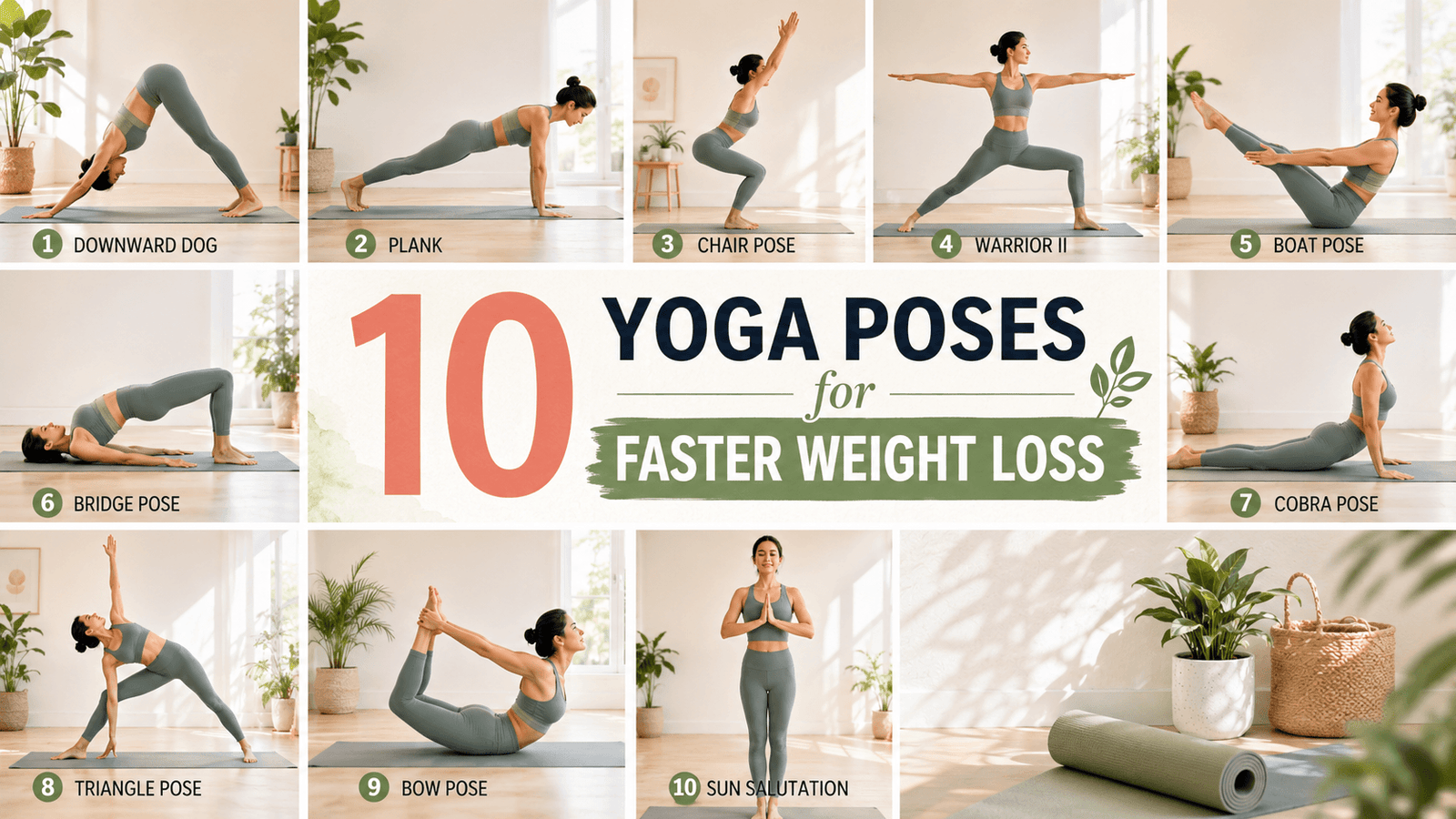
Losing weight does not always require intense gym workouts or complicated fitness programs. For many people, yoga can be a more realistic and sustainable way to become active, especially when starting a healthier lifestyle.
While yoga is often associated with flexibility and relaxation, certain poses can also help strengthen muscles, improve mobility, increase body awareness, and support calorie burning. Over time, regular yoga practice may also help reduce stress-related eating and encourage healthier daily habits.
Another reason many beginners enjoy yoga is because it feels approachable. You do not need expensive equipment, a gym membership, or advanced fitness experience to get started. A small space at home and a few minutes of consistency can go a long way.
In this guide, you’ll discover beginner-friendly yoga poses that can help support healthy weight loss while improving flexibility, posture, strength, and overall wellness.
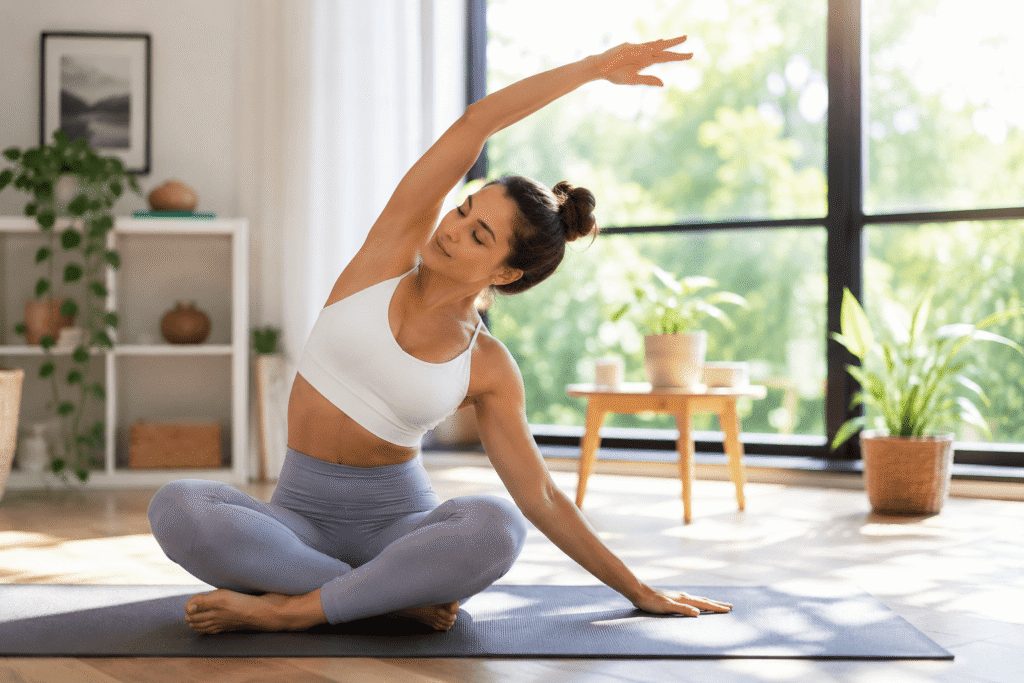
Why Yoga Can Help Support Weight Loss
Yoga may not always burn calories as quickly as high-intensity workouts, but it offers other important benefits that can support long-term weight management.
Many yoga poses engage multiple muscle groups at once, especially the core, legs, arms, and glutes. Some styles of yoga also keep the body moving continuously, which can increase heart rate and improve endurance.
Yoga can also help improve consistency. For beginners who feel overwhelmed by difficult workouts, short yoga sessions often feel easier to maintain regularly.
Benefits of Yoga for Weight Loss
- Encourages regular movement
- Helps build lean muscle tone
- Improves flexibility and posture
- Supports better mobility
- Strengthens the core
- Helps reduce stress and tension
- Encourages mindful habits
- Can improve energy levels
- Gentle on the joints
Even practicing yoga a few times a week can make a noticeable difference over time.
1. Downward Facing Dog
Downward Facing Dog is one of the most recognized yoga poses and a great full-body movement for beginners.
This pose stretches the back of the body while also strengthening the arms, shoulders, legs, and core.
How to Do It
- Start on your hands and knees.
- Lift your hips upward.
- Straighten your arms and legs as much as comfortable.
- Press your heels gently toward the floor.
- Keep your neck relaxed and breathe steadily.
Why This Pose Helps
You may feel this pose working through your shoulders, hamstrings, calves, and core all at once. It also helps improve flexibility and posture over time.
2. Plank Pose
Plank Pose looks simple, but it can quickly challenge your core and upper body muscles.
Holding a plank regularly can help improve stability, endurance, and overall strength.
Steps
- Start in a push-up position.
- Keep your body in a straight line.
- Tighten your core muscles.
- Avoid letting your hips drop.
- Hold while breathing normally.
Beginner Tip
If a full plank feels difficult at first, lower your knees to the floor for support.
3. Chair Pose
Chair Pose is especially effective for activating the thighs and glutes.
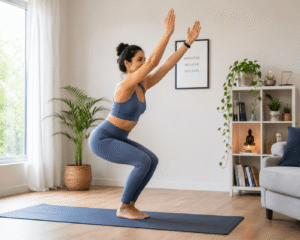
Many people feel this pose almost immediately in the legs, especially when holding it for several breaths.
How to Practice
- Stand tall with feet together.
- Bend your knees slowly.
- Lower your hips as if sitting into a chair.
- Raise your arms overhead.
- Keep your chest lifted.
What This Pose Targets
- Thighs
- Glutes
- Core
- Lower body endurance
4. Warrior II Pose
Warrior II is a strong standing yoga pose that helps improve stability and lower body strength.
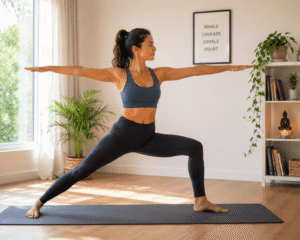
This pose also encourages better posture and body awareness.
How to Do It
- Step your feet wide apart.
- Bend your front knee.
- Extend both arms sideways.
- Keep your shoulders relaxed.
- Hold the position steadily.
Why Beginners Like It
Warrior II feels empowering and helps build confidence with balance and movement.
5. Boat Pose
Boat Pose focuses heavily on the abdominal muscles.
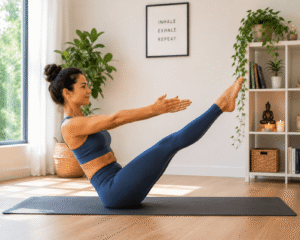
If your core muscles feel weak, this pose can help improve stability over time.
Instructions
- Sit comfortably on the floor.
- Lean back slightly.
- Lift your legs upward.
- Extend your arms forward.
- Hold while balancing.
Beginner Modification
Keep your knees bent if straight legs feel too challenging.
6. Bridge Pose
Bridge Pose gently activates the glutes, legs, and lower back.
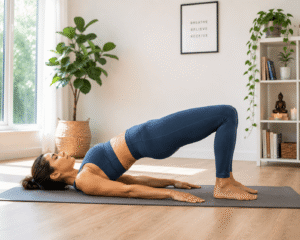
This pose is especially popular for improving posture and reducing stiffness from sitting too long.
How to Practice
- Lie on your back.
- Bend your knees with feet flat on the floor.
- Press through your heels.
- Lift your hips upward slowly.
- Lower with control.
Benefits
- Activates glutes
- Supports posture
- Engages core muscles
- Helps improve hip mobility
7. Cobra Pose
Cobra Pose is a gentle backbend that stretches the front body while strengthening the back muscles.
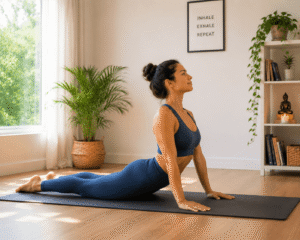
This movement can feel especially helpful after long periods of sitting.
Steps
- Lie face down on the mat.
- Place hands beneath your shoulders.
- Lift your chest upward gently.
- Keep elbows slightly bent.
- Relax your shoulders.
Helpful Tip
Avoid forcing the stretch. Move only as far as feels comfortable.
8. Triangle Pose
Triangle Pose improves flexibility while also encouraging balance and body awareness.
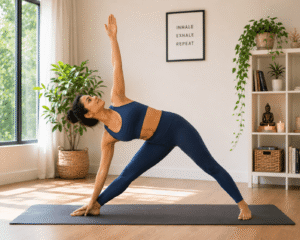
This pose stretches the legs, hips, and sides of the body.
How to Do It
- Stand with feet wide apart.
- Extend your arms sideways.
- Reach toward one foot slowly.
- Keep your chest open.
- Repeat on both sides.
What Makes It Useful
Triangle Pose combines stretching and muscle engagement at the same time, which helps support overall mobility.
9. Bow Pose
Bow Pose activates multiple muscle groups throughout the body.
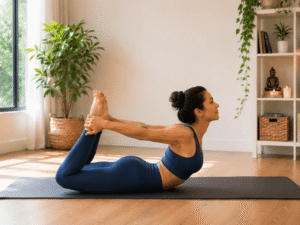
This pose can help strengthen the back, legs, and core while improving flexibility.
Instructions
- Lie face down.
- Bend your knees backward.
- Hold your ankles gently.
- Lift your chest and legs upward.
- Breathe steadily.
Beginner Reminder
Move slowly and avoid straining your lower back.
10. Sun Salutation Flow
Sun Salutations combine several yoga poses into one flowing sequence.
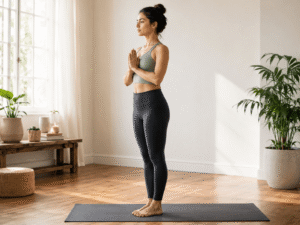
This movement flow keeps the body active and can feel more dynamic than static yoga poses.
Basic Flow
- Begin standing tall.
- Move into a forward fold.
- Step back into plank position.
- Transition into Cobra Pose.
- Finish in Downward Dog.
Why It’s Effective
Sun Salutations help increase full-body movement while improving flexibility, coordination, and endurance.
Tips to Get Better Results With Yoga
If your goal is healthy weight loss, consistency matters more than intensity.
Here are a few simple habits that may help:
- Practice yoga regularly
- Stay hydrated
- Walk daily when possible
- Focus on proper breathing
- Eat balanced meals
- Sleep well for recovery
- Avoid comparing yourself to others
Small daily habits often create the biggest long-term changes.
Simple Beginner Yoga Routine
| Yoga Pose | Time |
|---|---|
| Downward Dog | 1 Minute |
| Plank Pose | 30 Seconds |
| Chair Pose | 1 Minute |
| Warrior II | 1 Minute |
| Boat Pose | 30 Seconds |
| Sun Salutations | 3 Minutes |
This beginner-friendly routine takes less than 10 minutes and can easily fit into a busy schedule.
Common Mistakes Beginners Should Avoid
Trying Advanced Poses Too Quickly
Start with basic movements first and build confidence gradually.
Holding Your Breath
Steady breathing helps improve relaxation and movement control.
Focusing Only on Calories
Yoga is also valuable for mobility, flexibility, stress reduction, and healthy movement habits.
Skipping Recovery
Rest days are important for recovery and consistency.
Final Thoughts
Yoga can be a realistic and sustainable way to support healthy weight loss while improving flexibility, posture, balance, and overall wellness.
The most important thing is not doing every pose perfectly. What matters most is staying consistent and creating movement habits you can maintain long term.
Start slowly, listen to your body, and focus on progress instead of perfection.
Over time, small daily sessions can lead to meaningful results.
FAQ
Can yoga really help with weight loss?
Yoga can support weight loss by improving movement, muscle engagement, flexibility, and daily activity levels.
Which yoga pose is best for beginners?
Downward Dog, Chair Pose, and Bridge Pose are all beginner-friendly options.
How often should I practice yoga?
Many beginners start with 3–5 short sessions per week.
Do I need equipment for yoga?
A yoga mat is helpful, but most poses require very little equipment.
Is yoga suitable for overweight beginners?
Yes. Many yoga poses can easily be modified based on comfort and fitness level.